
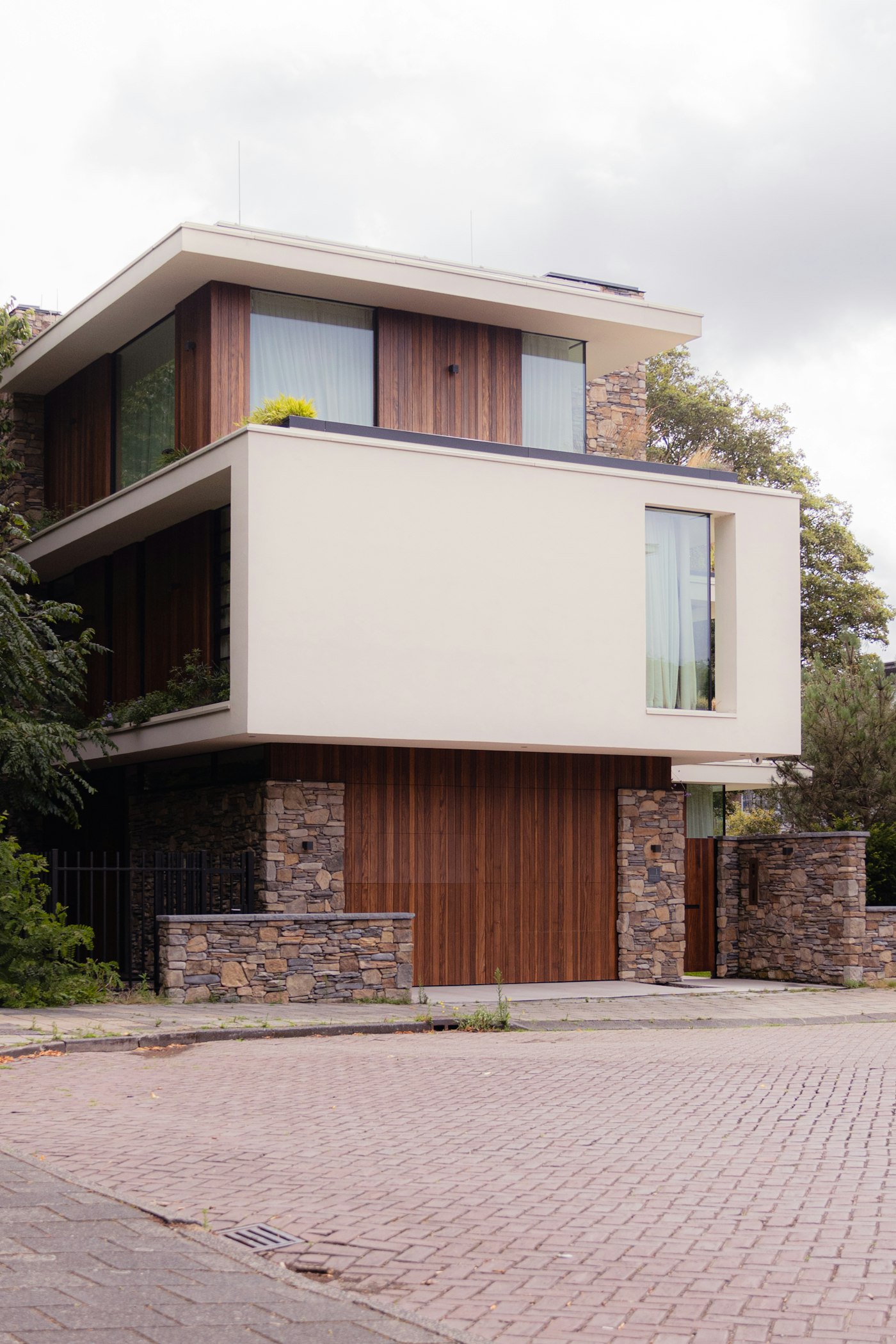
Mediterranean facades face three pressures a Northern European wall rarely meets at once: ultraviolet light strong enough to bleach pigment, salt aerosols that pit an unsealed surface, and a daily thermal swing that works rigid joints loose. Specifying for this climate is less about how a brick slip looks on day one and more about how it ages.
Start with pigment stability. Through-coloured slips, where the pigment runs through the body rather than sitting in a surface glaze, hold their tone far longer under hard light. Our brick-slip palettes are blended before casting, so a chip or a scuff simply exposes the same colour underneath.
Then water. The enemy on the coast isn't rain, it's salt-laden moisture drawn into the surface and left to crystallise. A slip rated for low water absorption, mounted full-surface so there are no hollow voids to trap moisture, and finished with a breathable water-based sealer, will shed salt rather than store it.
Finally, movement. A facade in Halkidiki can move several millimetres between a 7am low and a 3pm high. Flexible adhesive and a properly dimensioned joint absorb that movement; a rigid, over-filled joint transfers it straight into the slip and cracks the face.
Specified this way, stable pigment, low absorption, full-surface mount, flexible joint, a brick-slip facade reads the same in year ten as it did on handover. On the coast, that's the only test that matters.